The Silent Killer
High blood pressure (hypertension) is a common condition in which the long-term force of blood against your artery walls becomes high enough to cause health problems, such as heart disease, and stroke. It is commonly called the “silent killer” because you may not be aware that anything is wrong, but the damage is still occurring within your body.
According to the World Health Organization, there are over 1.4 billion people who suffer from hypertension worldwide. Men are affected more than women with 1 in every 4 men having high blood pressure & 1 in every 5 women affected.
Blood pressure is determined both by the amount of blood your heart pumps and the amount of resistance to blood flow in your arteries. The more blood your heart pumps and the narrower your arteries, the higher your blood pressure. A blood pressure reading is given in millimeters of mercury (mm Hg). It has two numbers.
- The top number (systolic pressure). The first, or upper, number measures the pressure in your arteries when your heart beats.
- The bottom number (diastolic pressure). The second, or lower, number measures the pressure in your arteries between beats.
Guidelines For Blood Pressure Readings
- Ideal blood pressure is considered to be systolic < 120 / Diastolic <80
- Elevated blood pressure is considered Systolic 120-129/ Diastolic < 80
- Hypertension stage 1 is considered to be Systolic 130-139/ Diastolic 80-89
- Hypertension stage 2 is considered to be Systolic 140 or higher / Diastolic 90 or higher
- Hypertension stage 3 (Crisis) is considered to be Systolic 180 or higher / Diastolic 120 or higher
- Low blood pressure is considered to be Systolic 90 or lower / Diastolic 60 or lower
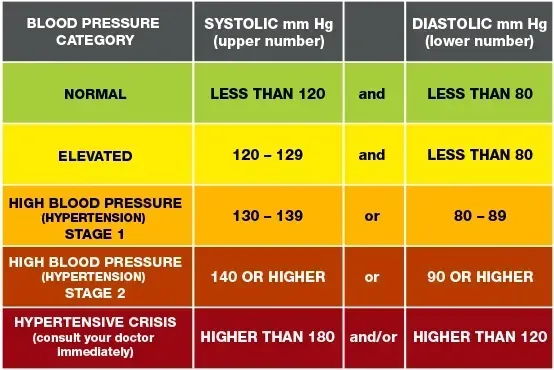
Photo credit- American Heart Association
According to recent studies, the risk of death from ischemic heart disease and stroke doubles with every 20 mm Hg systolic or 10 mm Hg diastolic increase among people from age 40 to 89.
Symptoms
The reason hypertension is called the ‘silent killer’ is many people may not be aware of the symptoms such as
- Early morning headaches,
- Nosebleeds,
- Irregular heart rhythms,
- Vision changes and,
- Buzzing in the ears.
More severe forms may exhibit
- Fatigue/Tiredness,
- Nausea/Vomiting,
- Confusion,
- Anxiety,
- Chest pain, and
- Muscle tremors.
A majority of the time, the symptoms may not be obvious and the best way to get a diagnosis is to take your readings regularly and schedule a visit to discuss this with your provider.
Causes of Hypertension
- High consumption of salt in your food
- Smoking or using tobacco products
- Consuming saturated fats & trans fat
- Lack of physical activity
- Low intake of fruits & vegetables
- High-stress levels
Stress-related habits such as eating more, using tobacco, or drinking alcohol can lead to further increases in blood pressure.
- Chronic health conditions
Such as kidney disease, diabetes, and sleep apnea.
- High alcohol intake
More than two drinks a day in men and more than one drink a day in women
UNCONTROLLED HIGH BLOOD PRESSURE LEADS TO
- Heart attack/stroke
Hypertension can cause arteries to harden and thicken (atherosclerosis) which in turn can cause heart attacks or stroke.
- Aneurysm
An increase in blood pressure can cause your artery to a ballon and weaken in a certain area.
- Heart Failure
In order for your heart to pump blood against the higher pressure in your vessels, it has to work harder. This causes the walls of the heart's pumping chamber to thicken (left ventricular hypertrophy). Eventually, the thickened muscle may have a hard time pumping enough blood to meet your body's needs, which may cause heart failure.
- Weaken & narrow blood vessels in your kidneys.
This can prevent your kidney from functioning normally.
- Torn, thick, or narrow blood vessels in the eyes.
This can result in blindness.
- Memory loss or less understanding
Uncontrolled high blood pressure may also affect your ability to think, remember and learn. Memory loss or understanding concepts is more common in people with high blood pressure.
- Alzheimer's/Dementia
Narrowed or blocked arteries can reduce blood flow to the brain, which may lead to a certain type of dementia (vascular dementia). A stroke that interrupts blood flow to the brain also can cause vascular dementia.
Management of Blood Pressure
Hypertension can be managed by:
- Change your diet
Eat foods that are lower in fat, salt, and calories. Alternatives for salt could be using flavored herbs and spices. Eating more fruits & vegetables, and consuming whole-grain foods while ensuring you reduce fried foods, processed/fast foods, and salted snacks.
- Limit alcohol
Limit intake to more than two drinks each day for men and less than one drink a day for women.
- Quit smoking and/or using tobacco products.
- Work on controlling anger and managing stress
Easy-to-do stress management activities include Meditation, Yoga & focusing on activities that bring you joy.
- Keep active
Every day, do simple physical activities, such as taking a walk, biking, dancing, swimming or playing with your kids, or walking your dog. Just ensure you move your body physically for 30-45 minutes.
Not all hope is lost if you are diagnosed with hypertension. Following recommended diets and exercises by your provider can lower and manage hypertension in some cases. Call us today to see how our providers can set you up on a diet that may lower your hypertension.