Can Testosterone Therapy Cause Hair Loss? What the Research Says
You're on testosterone therapy, or thinking about starting it, and now there's more hair in the brush than you'd like. Can testosterone therapy cause hair loss? This guide explains how testosterone, DHT, and your genes affect your hair, what the research does and doesn't tell us, and what to bring up with your Nurse Practitioner.
Does Testosterone Cause Hair Loss?
So, can testosterone therapy cause hair loss? Possibly. The research is mixed, and not every man on testosterone therapy notices thinning. Your genes and how sensitive your hair follicles are play a big part.
Pattern hair loss is common even without treatment. MedlinePlus Genetics, a National Institutes of Health resource, estimates that androgenetic alopecia, the clinical name for pattern hair loss, affects about 50 million men and 30 million women in the United States. It also reports that more than half of men over 50 have some degree of hair loss.
A narrative review in the International Journal of Dermatology pulled together 33 articles on testosterone and hair loss in male athletes. It found that studies linking testosterone levels to hair loss have produced inconclusive results. It also pointed out that no standardized guidelines exist for safe testosterone dosing in that group.
That research centers on athletes, so it doesn't map perfectly onto a monitored plan for confirmed low testosterone.
Primary care guidance also treats it as something to watch. A review of testosterone therapy in primary care, published in the International Journal of General Medicine in 2022, lists screening for hair loss and acne among the routine checks during treatment, alongside blood counts and prostate screening. That means thinning isn't a surprise to your provider. It's something they should expect to ask about. The same review notes that clinical guidelines generally recommend two separate morning blood tests to diagnose low testosterone.
How Testosterone, DHT, and Genetics Affect Your Hair
The hormone most often tied to pattern hair loss is DHT (dihydrotestosterone), a stronger hormone your body makes from testosterone. The same source ties pattern hair loss in men to androgens, a group of hormones that includes testosterone and DHT. It explains that excessive follicle stimulation can shorten each hair's growth period, so strands come in shorter and thinner.
Genetics sets the stage. Variations in the AR gene can make androgen receptors in your follicles respond more strongly, and having a close relative with patterned hair loss increases your risk.
That's why two men on the same plan can have different outcomes. One notices thinning at the temples or crown. The other notices nothing at all.
Testosterone and Balding: Who's More Likely to Notice Changes?
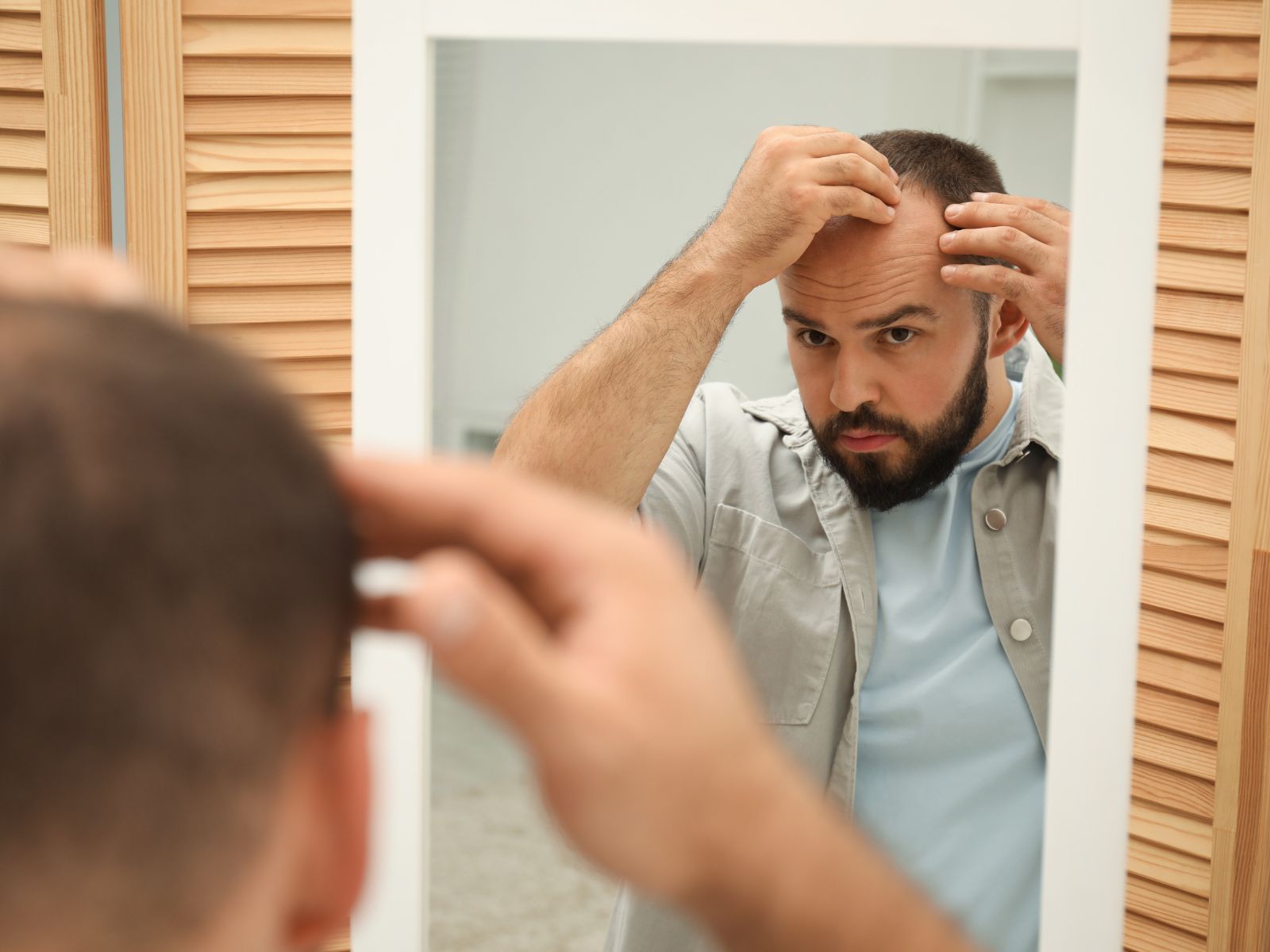
Not every man on testosterone therapy faces the same odds. Two factors can raise them:
- Family history: A close relative with patterned hair loss is a recognized risk factor.
- Age: The risk of pattern hair loss rises as men get older.
Having neither factor doesn't guarantee you won't develop it. If your hairline is already receding or your crown is already thinning, say so before treatment starts, so you have a clear starting point.
Is Hair Loss on TRT Reversible?
There isn't a clean research answer for men on TRT specifically, so we won't promise one. Male pattern hair loss develops over time. Outcomes vary from person to person.
Catching changes early and talking about them is a good place to start. Don't stop or change your dose on your own, since that can affect both your symptoms and your lab results. If thinning bothers you, ask your Nurse Practitioner about next steps, including whether a hair loss specialist makes sense for you.
Low Testosterone and Hair Loss: Is There a Connection?
The research here is mixed. Studies tying testosterone levels to hair loss have been inconclusive, so a single testosterone number can't reliably predict whether your hair will thin. Thinning can also have multiple causes, which is why your Nurse Practitioner weighs your history, labs, and timeline together.
Questions to Bring to Your Primary Care Provider
Bring these questions to your next visit:
- Have my symptoms and two separate morning lab results confirmed low testosterone?
- Does anyone in my family have pattern hair loss, and does that change my risk?
- Can we note where my hairline and crown are before treatment starts?
- How often will you check my lab work, and will you ask about hair, skin, and other side effects?
- If I notice thinning, when should I call?
If you're still weighing delivery methods, our guide to testosterone therapy options in Cedar Park covers how each one works. It also explains what a first visit typically includes.
How Impact Family Wellness Approaches Testosterone Treatment
At Impact Family Wellness in Cedar Park, our Nurse Practitioner-led Men's Health care starts with your symptoms, health history, cardiovascular risk factors, and lab results, not a single number. Testosterone therapy is considered for men with confirmed low testosterone and matching symptoms, and your progress is monitored over time.
Because membership includes unlimited visits, we want you to feel free to raise a concern like hair thinning early instead of waiting it out. We also review how TRT is monitored for blood pressure and heart health, since hair is only one of several things worth tracking.
Talk to a Nurse Practitioner About Your Hair and Your Hormones
Wondering how your own history and labs fit in? We'd be glad to walk through it with you. Schedule a visit with our team in Cedar Park, Leander, or Thorndale and get a plan built around your results, not guesswork.
Frequently Asked Questions
1. Does testosterone cause hair loss for everyone?
No. Whether hair thins depends largely on genetic sensitivity to DHT, so the effect isn't the same for every man. A close relative with pattern hair loss is one of the clearer risk factors.
2. Can increasing testosterone regrow hair?
Nothing in the research cited here suggests that raising testosterone regrows hair. Androgens, DHT in particular, are linked to pattern hair loss. Testosterone therapy is meant to treat confirmed low testosterone and its symptoms, not thinning hair.
3. Does testosterone cause balding?
Not by itself. Male pattern baldness comes from a mix of genetics and DHT acting on sensitive follicles. Research on whether testosterone therapy speeds this up is mixed, so it isn't a guaranteed cause.
4. Can testosterone therapy cause hair loss in women?
Women make testosterone too, and androgens play a role in female pattern hair loss, though other factors are also involved. If you're on testosterone therapy and notice new thinning, report it so your provider can review it.
5. Will my hair grow back if I stop testosterone?
The research cited here doesn't give a reliable answer, and outcomes vary from person to person. Your Nurse Practitioner can review your history and labs before any change to your plan is considered.
6. What other side effects do providers watch for on TRT?
Routine monitoring covers blood counts, prostate screening, acne, testicular size changes, and breast tissue changes, in addition to hair loss. The exact schedule depends on your health history and the type of therapy you use.
Key Takeaways
- Note your start date and any changes you notice, so your provider has a timeline to review.
- Take a photo of your hairline and crown on day one so later changes are easy to spot.
- Keep every follow-up visit and lab draw, so any change gets caught early.
- Call your Nurse Practitioner if you notice thinning instead of changing your dose yourself.
- Ask how your low testosterone was confirmed. Clinical guidelines generally call for symptoms plus two separate morning lab results.