DNA and Diet: Which Foods Fit Your Genetics? What to Know
You’ve seen the ads promising a meal plan written by your genes, and you can’t tell whether it’s science or sales. This guide is for busy parents who want straight answers about DNA and diet: what genes can influence, where the evidence runs thin, and which steps are worth taking now. You’ll finish knowing what a genetic test can and can’t tell you, and what to ask before you spend a dollar on one.
Does Your DNA Decide What You Should Eat?
Partly, but nowhere near as precisely as the ads claim. Your genes can influence how your body handles certain nutrients, but a 2020 review in the journal Nutrients notes that relatively little is known about most specific gene-diet interactions. Weight is even trickier, because body mass index involves multiple genes rather than a single switch.
When you ask which foods fit your genetics, the honest answer is a short list, in a few situations, with the science still catching up. Everything else comes back to habits you can control.
What Is Nutrigenomics?
Nutrigenomics studies how the food you eat and the genes you carry interact. It sits under the broader label of personalized nutrition, the idea that your eating plan should be tailored to your biology instead of a one-size-fits-all chart.
Nutrigenetics vs. nutrigenomics in plain terms:
| Term | The question it asks |
|---|---|
| Nutrigenetics | How do your inherited gene variants change how you respond to food? |
| Nutrigenomics | How might nutrients influence the way your genes behave? |
The two terms sound alike, but they point in opposite directions. A consumer DNA diet test is a nutrigenetic tool: it looks at specific variants and reports tendencies, not diagnoses.
What Can a DNA Nutrition Test Tell You?
A DNA nutrition test reads small, common differences in your genes and links each one to a trait, like how you process caffeine or folate. The results are a list of tendencies. On its own, it isn’t a diagnosis or a menu.
The better question is whether changing your meals based on those results improves anything. The Academy of Nutrition and Dietetics ran a systematic review of randomized trials published in 2020, covering studies through 2018, on exactly that, and the review found only weak-quality evidence. The review’s workgroup concluded there isn’t enough evidence yet to say whether adding genetic testing to nutrition counseling changes outcomes.
In the trials it reviewed, adding genetic results generally made no difference to body measures, cholesterol, or blood sugar compared with standard care. A few findings did vary by gene variant, and the Academy describes the field as still maturing. For now, the science is promising but unfinished.
Gene and Food Examples: MTHFR and Caffeine
Two well-known examples show how a gene can connect to what’s on your plate. They also show how much is still unknown.
MTHFR and Folate
The MTHFR gene provides instructions for an enzyme that helps process folate, also called vitamin B9, according to MedlinePlus Genetics. Variations in this gene are common worldwide, and most people who carry them don’t have neural tube defects.
If you’ve searched “mthfr diet,” you’ve probably run into long lists of foods to avoid. MedlinePlus doesn’t offer one. It notes that studies linking MTHFR variations to other conditions have had mixed results, so the role of these changes remains unclear. Before you cut foods or buy supplements because of an MTHFR result, talk it through with a primary care provider.
Caffeine Sensitivity
Caffeine sensitivity is one of the examples the review gives of how genetic information could help shape a nutrition recommendation. If a second cup leaves you jittery or wrecks your sleep, though, you already have that data.
Can Genetics Affect Weight Loss?
Yes, but genes are one input among many, not a verdict. Researchers note that traits like BMI involve multiple genes, so a single result rarely explains a stubborn scale. It’s also why a DNA weight loss test can sound more convincing than the evidence supports: the systematic review above generally found no difference in body measures when genetic results were added to nutrition counseling.
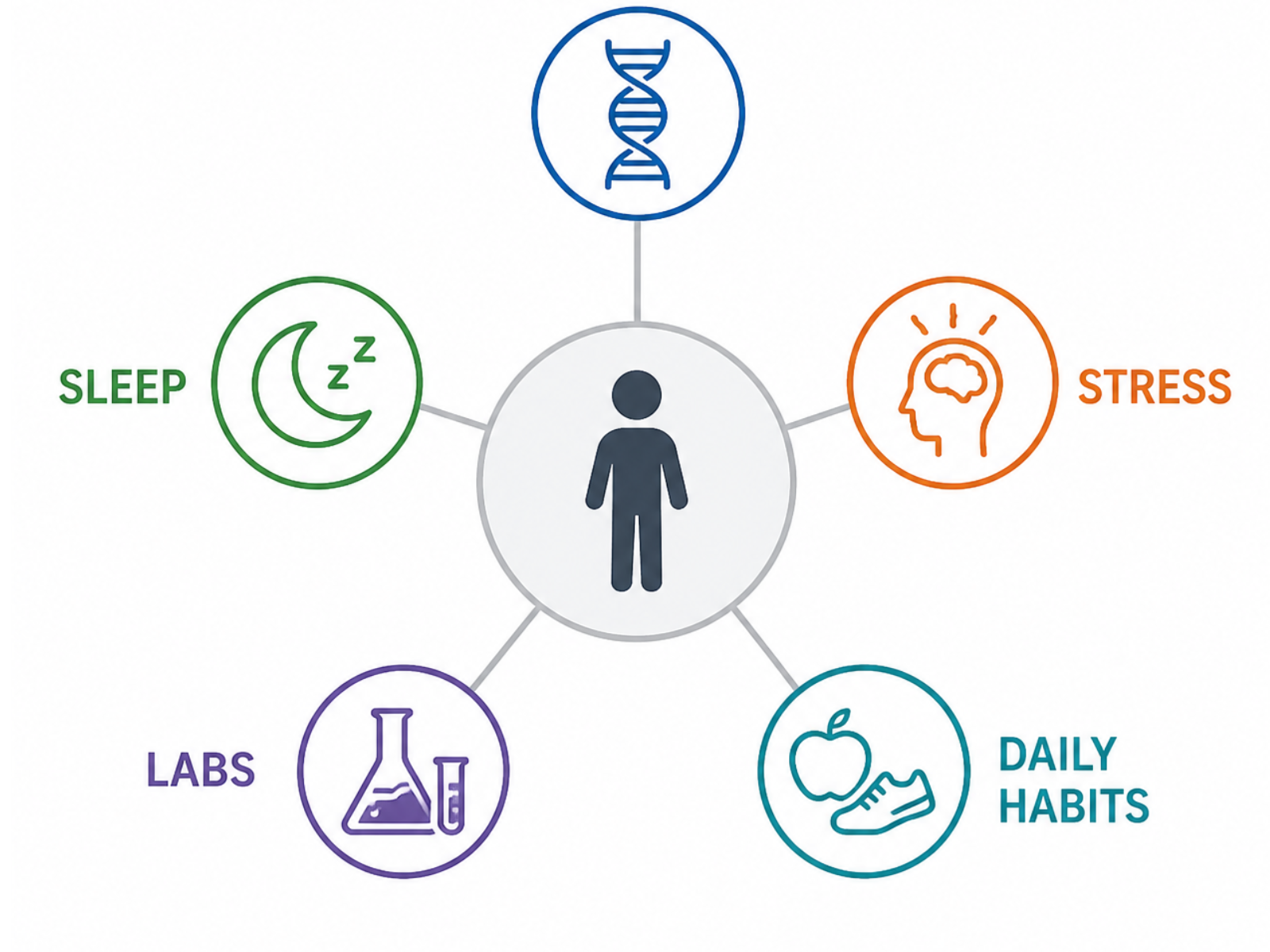
A more practical start is what you can see and change right now. Sleep, stress, daily eating patterns, and lab numbers like blood sugar and cholesterol show where your body stands today. If you’re a parent, that can include the family meals you already make most nights. If you want a baseline, we list our discounted lab pricing online.
Can Food Change Your Genes?
Food doesn’t rewrite your DNA sequence, but it may influence how active certain genes are. That’s the territory of epigenetics, one of the concepts the review’s authors say complicates predicting anyone’s response to a diet from genetic data alone. The relationship runs both ways, which helps explain why a single test can’t settle the question.
Is Genetic Testing for Nutrition Worth It? Questions to Ask First
Genetic testing for nutrition can be interesting, but interesting isn’t the same as useful. Ask these four questions before you buy:
- What will I do differently? If a result won’t change what you eat, it’s a curiosity.
- What exactly does it test? Look for a clear list of gene variants and the trait tied to each one.
- Where does my data go? Read how the company stores, shares, and deletes your genetic information.
- Have I covered the basics? A health history, family history, and routine labs are a solid place to start, and knowing how to read your lab results makes them far more useful.
DNA and Diet: How a Nurse Practitioner Can Help You Eat Well
Whatever you decide about testing, DNA and diet still start in the same place: your health history, your labs, and how your days actually run. That’s a conversation you can have with a primary care provider. At Impact Family Wellness in Cedar Park, we’re a Nurse Practitioner-led Direct Primary Care practice, and our weight loss program includes personalized nutrition guidance.
A plan you can actually follow beats a perfect one you can’t. Ready to talk through what to eat for your health with a Nurse Practitioner who has time to listen? We’d love to meet you. Register as a new patient at Impact Family Wellness in Cedar Park and take the first step toward a plan that fits your life.
Frequently Asked Questions
1. Do DNA diet tests work?
Not reliably, based on what we know today. A systematic review of randomized trials found only weak-quality evidence that adding genetic results to nutrition counseling changes outcomes. A test can describe a gene variant, but whether acting on it improves your weight or health is still largely unproven.
2. Are DNA diet tests accurate?
Reading a gene variant is easier than predicting what you should eat. The second is where the science is thin: little is known about most gene-diet interactions, and traits like BMI involve many genes. Treat any result as a tendency, not a prescription.
3. Can food change your genes?
Food doesn’t change your DNA sequence. It may influence how active some genes are, which is the focus of epigenetics. Epigenetics is also one reason it’s hard to predict how anyone will respond to a diet from genetic data alone.
4. Do I need to avoid certain foods if I have an MTHFR variation?
MedlinePlus doesn’t publish a food-avoidance list, and the evidence on how these variations affect health is mixed. If you’ve received an MTHFR result, ask your primary care provider how it fits your health history before you change your diet or add supplements.
5. I already took a DNA nutrition test. What should I do with the results?
Treat it as one data point, not a rulebook. Hold off on dramatic changes, like cutting out whole food groups. Share the report with your primary care provider so they can weigh it alongside your health history.
Key Takeaways
- Track what you can already observe, like sleep, energy, and how caffeine affects you, for a couple of weeks.
- Before buying any genetic test, write down one thing you’d change if the result came back high-risk or low-risk.
- Read a testing company’s data-sharing and deletion policy before you send a sample.
- Gather your family health history before your next primary care visit. It’s a free, useful starting point.